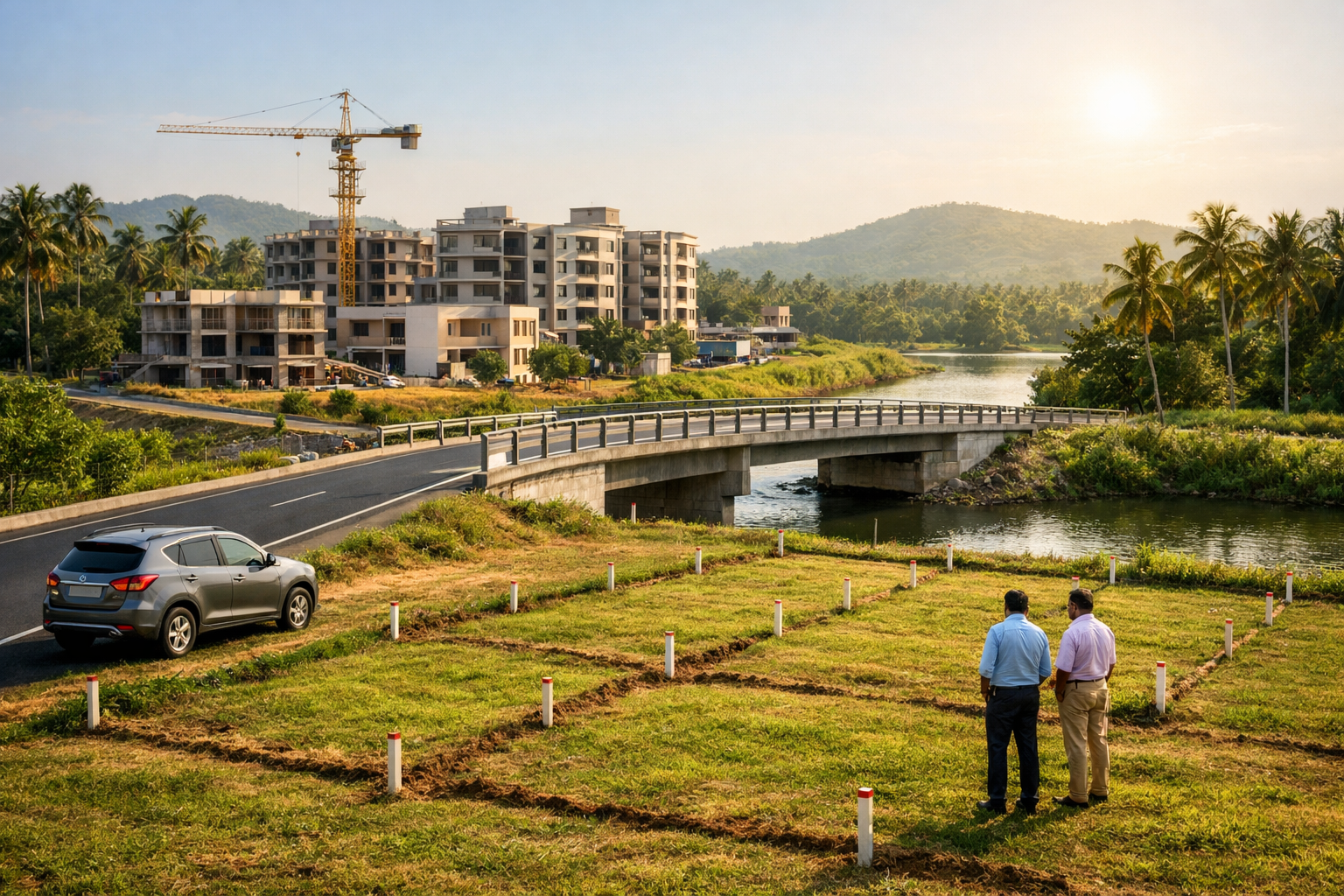
Learn how roads, utilities and social projects influence property investment in Kerala. Practical checklist and steps to evaluate infrastructure-driven price changes.
How Infrastructure Development Drives Property Prices in Kerala
Infrastructure upgrades change where buyers look, how developers plan and what local land commands. This article explains the mechanics linking roads, utilities and public services to land values, gives a practical checklist for investors and shows how to judge planned projects before committing to property investment in Kerala.
How infrastructure influences land value: the core mechanisms
Infrastructure alters a parcel's usefulness and marketability. Improved connectivity, reliable utilities and nearby social services increase demand. Higher demand pushes price levels, shortens sale times and changes the buyer profile from local users to commuters and investors.
Transport connectivity
Road upgrades, new highways, rail stations and improved public transit reduce travel time and expand a property's effective market. Land near well-connected nodes often sees faster price appreciation because it attracts commuters, traders and developers seeking predictable access.
Utilities and digital infrastructure
Consistent water supply, electricity and broadband make plots build-ready. Utility upgrades reduce development risk and construction lead time, increasing willingness among buyers to pay a premium for ready-to-build or easily serviced sites.
Social infrastructure and services
Schools, hospitals and commercial centres raise livability. Proximity to quality social infrastructure changes buyer intent from speculative to end-use purchases, stabilising demand and supporting higher long-term values.
Short-term versus long-term price effects
Type of infrastructure | Short-term price effect | Long-term price effect |
|---|---|---|
Major road or bypass | Speculative surge near announced alignment | Sustained growth if traffic and access patterns hold |
Utility upgrades (water, power, broadband) | Modest immediate premium for build-ready plots | Higher steady values and faster conversions |
Social infrastructure (schools, hospitals) | Slow initial response until services operate | Stable, elevated demand from end-users |
Practical checklist for investors
Before buying near an announced or ongoing project, verify these items to assess real upside and avoid speculative traps.
Confirm project status: proposed, approved, funded or under construction.
Check land-use plans and zoning: match project purpose with permitted uses.
Evaluate access vs frontage: plots with direct access benefit more than those blocked by other parcels.
Assess utility readiness: note connection timelines for water, power and sewage.
Estimate end-user demand: will commuters, families or businesses buy there?
Price comparables: compare pre-announcement and current rates within a 5 km radius.
How to use online tools and listings for verification
Track official project notices from local authorities and use verified property listings to monitor price movement. Platforms that provide verified listings, filters for connectivity and transaction support make it easier to spot plots with credible development potential. Use site data to compare similar plots and to check how buyer interest trends as projects progress.
For practical examples and regional guidance, consult articles on infrastructure and market trends. These resources explain district-level demand and due diligence steps that affect pricing.
Frequently Asked Questions
How soon do property prices change after an infrastructure announcement?
Prices can react immediately among speculators but meaningful, sustained increases typically appear only after project approvals, funding and visible construction start.
Can transport projects inflate prices artificially?
Yes. Announcements can create short-term spikes. Verify project funding and alignment to distinguish speculative premiums from durable value gains.
Which infrastructure upgrades most reliably raise property prices?
Long-term gains most often follow durable changes to connectivity and utilities that enable building and sustained access, plus social facilities that attract end-users.
What steps should I take for property investment in Kerala near a proposed project?
Confirm project stage with local authorities, review zoning, inspect access routes and compare recent sales of similar plots. Use verified listing platforms to track price changes.
How do I avoid overpaying when infrastructure is planned but not built?
Set a margin for risk, demand documented evidence of approvals and construction schedules, and compare multiple comparables rather than relying on announcements alone.
Conclusion and next steps
Infrastructure shapes where value concentrates, but the timing and permanence of price rises vary by project type and execution. Use a structured checklist, verify official documents and track market movement through verified listings to make disciplined decisions. For targeted searches and up-to-date listings near planned projects, visit Kerala Plots and explore district-level guides to match infrastructure outlook with investment goals.
Tags: infrastructure development, property prices in Kerala, real estate growth in Kerala, land investment Kerala, property investment in Kerala, connectivity and land value, Kerala plots, investment checklist, due diligence, build-ready plots